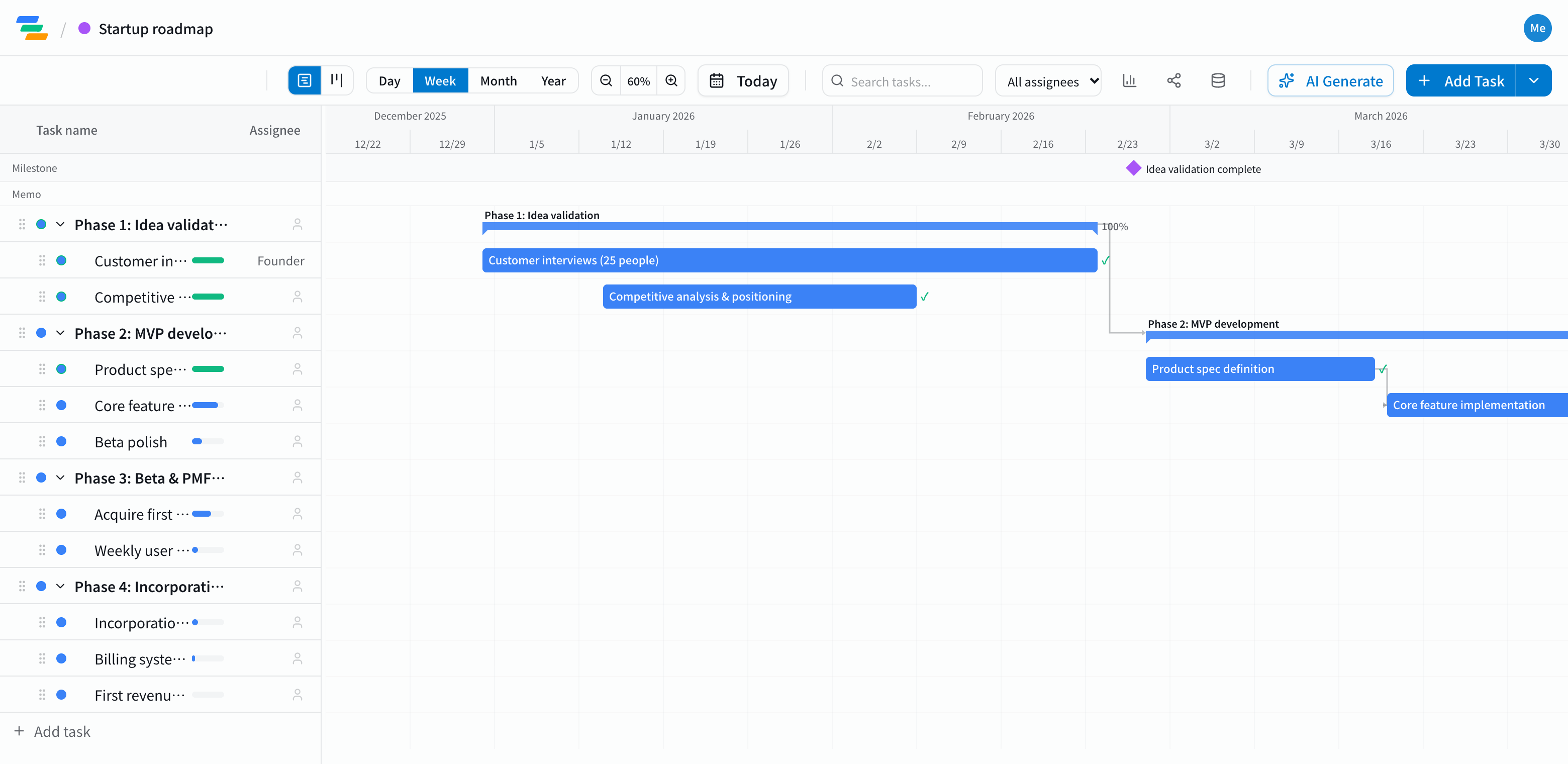
The main stages of a startup roadmap
Every business is different, but when you start on your own, stages like these make the work easier to organize. The template starts with this structure.
- Idea validation: customer interviews, competitor research, positioning
- MVP: deciding the spec, building the core features, getting it ready for testers
- Beta: finding first users, watching them use it and talking to them
- Incorporation and revenue: setting up the company, pricing and billing, first sales
Make the checkpoints milestones
Validation done, MVP working, first users signed up, first revenue. Mark checkpoints like these as milestones and you can see at a glance how far you've come.
Work that should only start once a stage is done (building after validating, for example) can be linked with arrows. If the build takes longer, drag the bar later and what follows moves too. When your day job or family life changes the plan, you can see the effect on the whole roadmap right away.
Compared with notes or a spreadsheet
- The whole picture: a plan of several months to a year or more fits on one screen
- Progress: track a percentage on each task, or see tasks by status in the board view
- Sharing: invite a co-founder as a member to edit together, and send family or mentors a share link to view without an account (view-only, on every plan)
Draft the roadmap with AI
Write one line such as "Launch a SaaS within a year while keeping my day job, and get the first paying customer" and the AI drafts stages, durations and dependencies. Adjust it to the time you actually have. You can also ask the AI to review the plan and point out unrealistic dates.
Getting started
- Sign up free and pick the startup roadmap template (or have the AI draft one from a single line)
- Adjust the stage lengths and checkpoint dates to your plan
- Update progress as you go. When plans change, just move the bar